
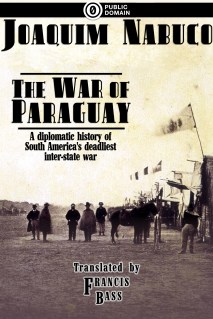
 This post remains available for posterity’s sake, but a much revised and much expanded version of this translation is available completely for free! The revised version includes translated footnotes, a translated appendix, an expanded introduction, and a map of disputed territory and important locations. You can download a copy in the following formats: Docx — Epub — Mobi — PDF. Or, if you want to throw some money my way, you can set your price for it on Smashwords. And it’s in the public domain!
Not to be confused with the Uruguayan Civil War, the Uruguayan War, or Brazilian Invasion of 1864 [Invasión brasileña de 1864] as it is known in Spanish, or War Against Aguirre [Guerra contra Aguirre] as it is known in Brazil, was the the conflict that set the Paraguayan War in motion. With some chapters coming up that deal heavily with this conflict, it’ll be useful to know the broad strokes of the thing, before Nabuco sketches in the details of Brazil’s involvement in it.
The Conservatives’ Rebellion
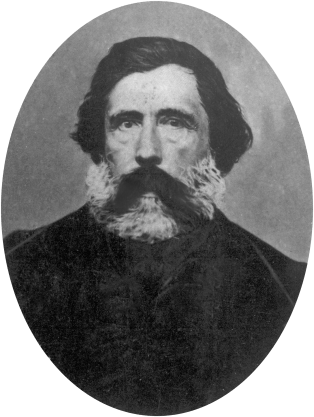
In the wake of the Uruguayan Civil War, Blancos and Colorados alike pushed for a new political culture of cooperation, closing the divide between the rival factions. One take on how to achieve this cooperation was fusión—proposed by the widely respected statesman (though he was an old Colorado, Blancos admired him as well) Andrés Lamas, the idea was to rebuke the old titles of Blanco and Colorado, and move forward without these partisan distinctions, unified for the good of the country. In August of 1855 he published a “Manifesto addressed to my compatriots” [“Manifiesto dirigido a los compatriotas”], which introduced the idea of fusionismo, and was harshly critical of the caudillo sects of both parties. Shortly after this, a group of Colorados continued with this criticism, focusing their vitriol on the Colorado caudillo president of Uruguay, Venancio Flores. Things only worsened when Flores demanded that La Libertad, the mouthpiece of these dissidents, cease publication. On 1855 the dissidents formed the Conservative Party, and took up arms against Flores. Flores fled the capital, and the Conservatives established Luis Lamas as president of the country. During this time, Flores’s minister of Foreign Affairs requested intervention from the Empire of Brazil, which was less than eager to get involved in another civil war in the Eastern State.Read More »


 Francis Bass