Review: The Left Hand of Darkness by Ursula K. Le Guin

I wrote this post before Ursula K. Le Guin passed, though it seems fitting now to open it with these words of hers, in response to the question, “What do you want to happen to your books after you die?”:  “I want them to be available, I want cheap paper editions of them, I want them to be continuously downloaded in forty different languages, I want them to be read, I want them to be argued about, I want people to cry over them, I want unreadable dissertations written about them, I want people to get angry with them, I want people to love them.” Well, I’ve read a second-hand cheap paper edition of The Left Hand of Darkness, gotten angry with it, kind of loved it in a few moments, argued about it (in my head, with myself and with two different versions of Le Guin), and now, behold, an unreadable dissertation blog post. Hopefully, this is exactly as Le Guin would wish. Rest in peace.

TheLeftHandOfDarkness1stEd
Cover of the 1st edition, vastly superior to the latest edition’s cover, which is just a glacier, honestly it’s stunning how mediocre that new cover is. Courtesy of Ace Books

The Left Hand of Darkness is one of those books I’ve always felt silly for not having read—and likewise, Ursula K. Le Guin is one of those authors I’ve always etc. Not just because Left Hand is considered a classic, and Le Guin one of the greatest, most influential sci-fi/fantasy writers, but because it’s the kind of sci-fi and fantasy that really interests me. Sci-fi with a focus on society, on the world, on characters. Not to mention, the gender thing—I’ve always heard that Le Guin is a great feminist writer, someone who subverts and challenges our ideas about gender, and especially about women. And Left Hand is, of course, the gender book—or the book without gender. A world where the dominant sentient life-form has no biological sex—fantastic. I’m always interested in that kind of premise, I always like to see deconstructions and reconstructions of gender. Yet, I somehow never got around to reading it, I always had some other book or author I was more interested in. I finally decided to read the book when I got it in a white elephant gift exchange, and, for months, had the physical copy sitting about in my bedroom somewhere, staring at me.

So I read it. One less thing to feel silly about Francis, good job. After reading it, and kind of wondering what everyone else saw in it re: the discussion of gender, I read Le Guin’s essay on the book, “Is Gender Necessary?” Actually I read the “Redux” version, which was written over a decade later, with annotations from Le Guin clarifying and arguing with her past self. In some ways, the redux essay is a revisiting of a revisiting—Left Hand came out in 1969, “Is Gender Necessary” (henceforth to be referred to as IGN) in 1976, and the redux in 1988. Which would make this blog post a commentary on a commentary on a commentary on a book, at least in some part.

I’ve struggled with how to write this post. It seems unfair to review the book as if its some kind of argument—in fact, Le Guin herself mentions this in “Redux,” when she writes that “critics of the book insisted upon talking about its ‘gender problems’ as if it were an essay not a novel.” That line instantly made me think of “Cat Person,” the Kristen Roupenian short story that made the rounds last year, and which was bizarrely referred to as an “article” or “essay” by some. These stories did not ask to be scrutinized as perfectly hygienic arguments about gender and sexuality. The idea that Left Hand is an incredible classic which strikes right to the heart of gender politics is external to the book. So I’ll do my best to separate the two, to review the book as just a book, before specifically going into why I found it lacking in terms of gender commentary.Read More »
The War of Paraguay: Chapter XIII, Nabuco Recuses Himself from Forming a Ministry. — He Accepts the Role of Minister of Justice.

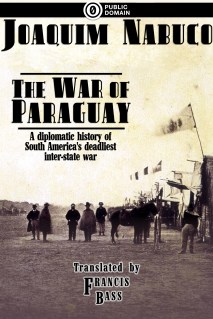
twop-c-10This post remains available for posterity’s sake, but a much revised and much expanded version of this translation is available completely for free! The revised version includes translated footnotes, a translated appendix, an expanded introduction, and a map of disputed territory and important locations. You can download a copy in the following formats: DocxEpubMobiPDF. Or, if you want to throw some money my way, you can set your price for it on Smashwords. And it’s in the public domain!

Note: This chapter and the next few deal heavily with the politics of the Empire of Brazil (should these chapters even be included in this book?), so I recommend reading this supplemental post first. Or you could just skip these chapters entirely. I think they’re neat, but they’re not directly related to the war.

The Furtado ministry fell in a secret ballot vote soon after Parliament reconvened, having not wanted to call for a roll-call vote. They did not want or need to know their enemies.

Firstly, the Emperor called on the Viscount of Abaeté, who for a long time had been a mere spectator of the partisan fighting, to form a government. Abaeté put forward Saraiva’s name. Saraiva, fruitlessly, attempted to form a ministry—Furtado’s friends did not forgive him for that Liberal government’s fall, to which he had contributed (1). In vain, he tried to come to an agreement with Teófilo Ottoni, typical of Saraiva. Giving up, he indicated the name of Nabuco, who was then summoned.

For the first time the Emperor looked to Nabuco, after there’d been five ministries formed with members of the “League” (2), of which party Nabuco had been, in everyone’s opinion, the creator—and the sovereign did not even arrive at him without first having tried two other options. One could believe that the direness of the situation forced the Emperor to turn to Nabuco at the last moment; a circumstance that contributed much to Nabuco, in turn, not accepting.

It was not that some overblown pride moved him: none of his colleagues in the Paraná ministry (3) had even reached this position; Paranhos (Viscount of Rio Branco) would only reach it in 1871; Wanderley (Baron of Cotegipe) in 1885; Pedreira (Viscount of Bom Retiro) had renounced politics. Eusebio de Quierós, who had governed in, made, or unmade every ministry since a certain time, had been called only once to San Cristobal. But Nabuco had created the ruling government, and was, of everyone, the most proper to lead it, because he brought, in a greater degree than any other, the spirit of benevolence, the impartiality necessary to maintain it, and a spirit that inspired great confidence, to—their respective leaders aside—each one of the parties. He had destroyed the Conservative oligarchy in the senate and made possible the new political environment. Of this environment, he was, intellectually, the oracle; politically he had a neutral title—moderator. Because of this, since 1862, every summons to São Cristóvão that was not made to him (although for each time there has been some provisional reason not to name Nabuco) seems to be a preterition (4) For this the belief that he was a persona non grata had been ingrained in political circles; a belief that also existed with respect to Paraná, Eusebio de Quierós, Cotegipe, both Paulino de Sousas, Teófilo Ottoni, and others.

The primary condition for the success of any ministry is the Emperor’s goodwill, and not because he can betray a president of his Council, but because only his discretion can be enough to destroy the minister’s necessary trust in his own stability. So, perfect accord between the two entities—the Emperor and the head of the cabinet—was essential for the government’s progress. The two times that Nabuco had served in the cabinet the Emperor gave him no reason to complain, nor even the third. The reasons that had moved the Emperor to put him off as an option seemed to him plausible, from a strictly parliamentary point of view, given the detachedness in which, without ceasing to guide the government, Nabuco had been placed, and which he himself proclaimed. He also knew the Emperor’s methods well enough to know that if Dom Pedro II had wanted to have him as prime minister, he would have gone looking for him in his exile, as with others he had done on such occasions, even with statesmen that had ostracized themselves. That lack, not of trust, but of desire, of affinity, which the Emperor had toward him, weighed more on Nabuco’s spirit, making him refuse the belated investment of power, than some sensitivity to being summoned only after other ministers.

But more than anything, the visible division of the Conservative Party dominated the Chamber. Nabuco, who had not taken part in Furtado’s fall, was better looked on by historians than Olinda (5), Zacarias, and Saraiva, while the Progressives considered him their most eminent leader. But to form a ministry it was absolutely essential to ingratiate himself with one group or another; in matters of people—which is what these matters come down to, not anything else—and matters of cabinet, for deputies and senators, it was necessary to support their faith in the balance of power, and at the first moment that this was neglected, the minister, whoever they were, had to be excised, which was perhaps feared by Nabuco more than anyone. He would faithfully explain his qualms before the Chamber, and the reasons for his renouncement.

Marquis_of_Olinda_1860
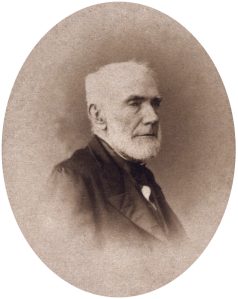
Pedro de Araújo Lima, Marquis of Olinda, ca. 1860.

Hearing this, the Emperor summoned the Marquis of Olinda, and Nabuco, as well as Saraiva, acceded to serve at Olinda’s command, proving that they were not motivated by any ambition for that highest position. The ministry was constituted in the following manner: President of the Council and Empire, Marquis of Olinda; Justice, Nabuco; Navy, Saraiva; War, Ferraz; Treasury, Días de Carvalho; Foreign Affairs, Otaviano; Agriculture, Paula e Sousa. Counting those who had been charged with organizing a cabinet and had not achieved it, the ministry brought under its wings four ex-presidents of the Council—Olinda, Ferraz, Nabuco, and Saraiva. Besides these, Otaviano would’ve entered among them, who found himself at the time in the Río de la Plata, and who could not accept. For such names was the ministry known by the denomination of the cabinet of eagles.Read More »

The War of Paraguay: Supplement 3, Brazilian Politics of the Mid-19th Century

twop-c-10This post remains available for posterity’s sake, but a much revised and much expanded version of this translation is available completely for free! The revised version includes translated footnotes, a translated appendix, an expanded introduction, and a map of disputed territory and important locations. You can download a copy in the following formats: DocxEpubMobiPDF. Or, if you want to throw some money my way, you can set your price for it on Smashwords. And it’s in the public domain!

Overview of the Government

The constitution of the Empire of Brazil stated that “The representatives of the Brazilian Nation are the Emperor, and the General Assembly.” [Art. 11. Os Representantes da Nação Brazileira são o Imperador, e a Assembléa Geral.] In this way, the Empire of Brazil was a constitutional monarchy, wherein the Emperor and the Parliament were servants of the people of the empire. The idea was that the emperor was the enduring, big-picture ruler (the “permanent will” as Nabuco says in Um Estadista [vontade permanente]), while the General Assembly attended more to the day to day concerns of the state.

The Emperor appointed judges, magistrates, senators, provincial presidents, ministers of state, and eventually the President of the Council of Ministers—a position similar to Prime Minister. The Emperor was responsible for sanctioning laws in order for them to go into effect, though parliament could force a bill into law if it was voted through by two consecutive legislatures. The Emperor could also commute sentences and grant amnesty.

While it’s wrong to say that the emperor was just a figurehead, certainly the General Assembly was the main governing body of the Empire. It consisted of the Chamber of Deputies (the lower house) and the Senate (upper house.) The General Assembly (which is alternately referred to as “parliament” and “the legislature”) held the power of the purse, power to modify, suspend, and enact laws, control of the military, and power to create government offices.Read More »

New Publication: Beneath Them

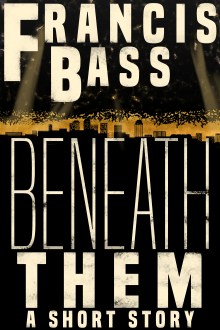
beneaththem-c-3I’ve just published “Beneath Them,” a short story available on Smashwords and Amazon.

In this piece of flash fiction, without warning, thousands of alien spaceships have appeared above major urban areas around the globe, and some have descended to devastating effect. Although the aliens have expressed a lack of ill intentions, and a desire for “recreation,” no one really knows what they are doing on Earth. The only thing that is clear is their overwhelming power, and their overwhelming intelligence.

In the shadow of this invasion, life goes on as Atlanta resident Cheyenne, and her younger cousin Denise, deal with roaches in their apartment.

Also included in this publication is a brief afterword, in which I describe my own encounter with a cockroach which inspired this story.

The War of Paraguay: Chapter XII, The Furtado Cabinet and the War

This post remains available for posterity’s sake, but a much revised and much expanded version of this translation is available completely for free! The revised version includes translated footnotes, a translated appendix, an expanded introduction, and a map of disputed territory and important locations. You can download a copy in the following formats: DocxEpubMobiPDF. Or, if you want to throw some money my way, you can set your price for it on Smashwords. And it’s in the public domain!

furtado-2
Francisco José Furtado, ca. 1867

The first appeal to Brazilian patriotism, after López’s attack was known, had to be made by the Furtado Cabinet. The first recruitment of the Voluntarios da Pátria, decreed by the cabinet, produced a spontaneous national movement. The nature of our people being, in great part, recalcitrant toward military service, the battalions of volunteers, which the prolongation of the war necessitated, were recruited by allowing the recruits to choose between service in the rank and file and voluntary service, which would be temporary, with special advantages (i). This does not mean that the war with Paraguay would remain well regarded and popular until the end. There is always a great difference, in any country, between those that embrace the national cause with enthusiasm, and those who defend that cause on the battlefield. The merit of those that offer themselves to the war effort should be considered extraordinary; but the fact is that the campaigns of Paraguay were carried out with soldiers from the draft, and that the war would have been impossible to sustain in any other way given the scale it reached and the time it took. Our race, although we become militant as soon as we wear the uniform and grow accustomed to obedience, does not know to voluntarily exchange independence for discipline. However, that initial drive, which produced volunteer battalions, does not cease to be a prize of honor for Furtado, because it is impossible to deny that part of that drive should be attributed to the government’s popularity, and the expansive ableness of the Liberal element represented in the government.

Transferring power to his successors, in May, the Furtado Cabinet left to them the following inheritance: as far as liabilities, a war with Paraguay recently begun, Mato Grosso invaded and partially under control of the Paraguayans, and the expectation of an invasion of Rio Grande do Sul, towards which province Estigarribia’s corps was already marching. As far as assets, the war with Montevideo, which had looked all but declared, concluded despite itself, sooner than should have been expected, and turned into an alliance; the Triple Alliance signed in Buenos Aires, lacking only ratification; an army corps forming in Montevideo; on the Paraná the fleet that, later (11 June), would be victorious at Riachuelo; and, it can be said, in the shipyards, the better part of the ships that were destined to force the pass at Humaitá.

Footnotes

i. Tito Franco says, speaking about the Furtado Cabinet: “In very short time our little fleet numbered 33 steamers and 12 sailing ship, crewed by 609 officers and 3,627 soldiers. The cabinet began rapidly constructing two battleships in the shipyards of the capital, ordered the construction of others which would come later, bought transports and a great amount of arms and munitions. It joined the single voice of patriotism to an army, and through no other means than the decree to create corps of Voluntarios da Patria.”
“The number of citizens that have volunteered themselves to form battalions,” says the War Report, “can be calculated at 10,000. … Recruitment is suspended and recruiters are declared unfit in every province.” From December 1864 to 12 May 1865 (according to the Baron of Rio Branco in Schneider) 8,449 men went to Montevideo, and 1,898 to Rio Grande and Santa Catarina; total, with officers: 10,353. Compare with what Ferraz says later about the inheritance that the 12 May ministry received from its predecessor.

The War of Paraguay: Chapter XI, The Fortune of the Alliance

twop-c-10This post remains available for posterity’s sake, but a much revised and much expanded version of this translation is available completely for free! The revised version includes translated footnotes, a translated appendix, an expanded introduction, and a map of disputed territory and important locations. You can download a copy in the following formats: DocxEpubMobiPDF. Or, if you want to throw some money my way, you can set your price for it on Smashwords. And it’s in the public domain!

Brief note: This chapter deals with the Uruguayan War. In the final version of this book, I may end up switching the order of it, so that it occurs closer to chapter IV, V, and VI. Just a heads up. It threw me for a bit when I was first translating it.

The best argument that can be made of the events in Rio Grande is to confess that all our resources together were insufficient to face the enemy; that the enemy’s errors were even greater than ours; and that if we had been wise, perhaps the enemy could have been wise too, crushing us. What’s certain is that everything happened in the best way possible for us. The audacious plans based on the offensive against Estigarribia, when he found himself in Misiones, could have produced a disaster; the very defense of São Borja, could’ve resulted in the union of the three separate columns, and the aid of them by Robles’s army. The only military error worthy of attention that is observed in this improvised war is that of having begun it with forces inferior to the enemy. If the enemy had known to take advantage of the superiority it had in those first minutes, no one can calculate the consequences, or at least the political consequences, of the panic that would have been produced.

All the problems in this war were resolved for us in the most unexpected way. López had no enemy so fatal as his own acts, so poorly directed that they seemed embattled by a hidden power, which entertained itself by scuttling them. His attacks always surprised us, but they lost their effectiveness because of an excess of optimistic recklessness, because of an overly strong surety of being victorious, although the very sluggishness of our movements seems to have helped us, purposefully causing despair in a belligerent who was isolated from the outside world, as Paraguay continued to be, with the river blockaded. The need López felt to attack Rio Grande, a province that he knew to be defenseless thanks to his friends in Montevideo, Corrientes, and Uruguay, became an obsession in the manner of those other despotic whims, and that obsession determined the character of the war. A slave to his fixed idea, he let himself be dragged by it up to the point of invading Argentine territory when he already found himself at war with a nation many times stronger, numerically, than Paraguay, and of a different refinement, wealth, and diversity of resources. If he had proceeded in another way and instead of invading Argentine territory to reach Rio Grande he had left his army from Cerro León and Humaitá to cover his lagoons and jungles, attempting to awaken the suspicions of the Río de la Plata against Brazil’s so-called domineering tendencies, perhaps the Paraguayan War, with Argentine neutrality secretly maintained, would have been the Empire’s ruin.

From this comes the great responsibility taken on by the government that began the Uruguayan War—the cabinet of 15 January 1864 (1). They surely did not foresee Paraguay’s intervention, and when this came about in the form of mediation, it already would be ungraceful to back out. But that is precisely what politics is; the player must always calculate the possible moves of their opponent. In everything we undertake we fight the unexpected; the most foresighted player always wins the game. In 1864 there was in our political sphere a genuine movement in favor of the Uruguayan War, and the Zacarias Cabinet had to yield to that “national unanimity.” It is not a sufficient defense for the cabinet to claim that no one contributed to that unanimity more than the conservative leaders, above all Pimenta Bueno, but it would be valid before a court of chancery.

Given the risk that we ran, the war in 1864 was “a leap in the dark” that the government made with the most absolute unawareness of the complications of the fall. It is quite certain that the complaints and claims that the state of our border produced did not justify the declaration of war to Montevideo, requested by the messengers from the countryside; at least not while the Montevidean government had to fight an armed rebellion. It’s also true that  the ministry of 15 January found in Saraiva a man that, through the sacrifice and nobility of his attitude, mended the toughness and wickedness that there could have been in our instructions, and gave the Blanco government an excellent opportunity to finish the civil war and ensure peace in all of the Río de la Plata; but that same government availed itself of such an opportunity to construct, with Urquiza’s resentment and López’s ambition, a system of forces capable of facing Brazil, once Buenos Aires’s superiority was destroyed. From that point arose an order of things full of dangers for us, in Montevideo, and fortune did not wish for the collision of the two coalitions in formation to remain deferred for a more unfavorable eventuality. In the exact moment in which a delay could have been attempted, which probably would come to facilitate, in the future, a combination of forces against Brazil, the ministry of 15 January falls.

On 31 August Furtado receives a situation that is impossible to modify, though he still wants to, because in place of Saraiva Tamandaré remains, the which considered diplomatic issues with the irritability of the mariner little disposed to measure the political consequences of his actions, so that his admiral’s honor and the brilliance of his flag remain intact before the foreign fleets, and also because in those decisive months of September and October Furtado himself found himself fighting with the great crisis of 1864 (2), which threatened to ruin the commerce of Rio de Janeiro. But the government only had one thought; any other person that would have occupied the seat of power in his place would have done the same; ignorance or calculation would give the same result. The Emperor, who was the permanent will of the country, didn’t think of backing out, but even if it had been proposed, events would not have permitted it. In one way or another López had to initiate the decisive match, and the adversary he chose was Brazil. Whatever the responsibility of the ministers that ran the risk of this war, for which the country did not find itself prepared, and which could have been disastrous, the campaign in itself can be considered (as much as it’s possible to calculate what would have happened if events took another course) as a true lightning rod of all the electricity that had been accumulating in the Río de la Plata.

Translator’s Notes

1. That is, the Zacarias cabinet, lead by Zacarias de Góis e Vasconcelos.
2. This refers to a financial crisis, involving a few major banks in Rio de Janeiro, which had been struggling due to a recent decline in global coffee prices (coffee being an enormous industry in the region.)