An Imperialist Writing Policy — What and Why

A year and a half ago I returned home for the summer break knowing that, whatever else I worked on for the next few months, by the end of the summer I wanted to have finished the rough draft of Suggest the Empire. At that point I’d already been wanting to write this play for a year or two, though I’d previously put it off because I knew it would be massive, strange, and demanding in multiple ways. How did I know this? Well here’s my short description for the play:

A history play about an invented history, exploring the theatrical nature of nationalism and empire.

So yeah. Massive strange demanding. And I had never read or seen a history play (in the Shakespearean sense of the term) back then at the beginning of summer 2016, so I decided that would be a top priority. I determined to read seven of Shakespeare’s histories—Richard IIIRichard IIHenry IV parts 1 & 2, Henry V, and Julius Caesar—before beginning to write the play. I also added Stuff Happens by David Hare to my reading list, a history play about the lead up to the Iraq War. These were the works that I felt I had to read before beginning work on STE. Obviously I planned to write other stuff in the mean time, but I wouldn’t start Suggest the Empire until I’d finished those eight plays.

As I progressed into the summer I came across more and more works which I thought could in some way inform the writing of STE—youtube channels like Historia Civilis, documentaries like Secrets of Great British Castles, movies like Waterloo, games like Mount and Blade and Reigns—which I’d add to the list. Some of these I’d already been meaning to get around to, others I stumbled upon and decided to look into because of STE, and others I was already engaged with anyway, just by happenstance—the greatest example being The Absolute at Large. Just by luck, that very summer I was recording an audiobook of The Absolute at Large, a satirical novel which is heavily critical of nationalism and fanaticism. I came to think of this body of plays, movies, books, tv shows, and whatever else, as the product of an imperialist writing policy. I was not solely consuming, and working on, Suggest the Empire, though almost everything I consumed and worked on fed back to that play in some way.

SuggesttheEmpire-c-2The result was that, when it finally came time to write Suggest the Empire, it was a breeze. Over the past months I’d become fluent in the language of empire, of nationalism, of history, of historical drama, and I had no trouble plotting out the story or sketching out the world, or, as I actually wrote the thing, sprinkling in realistic military, cultural, or political details. I’m incredibly proud of Suggest the Empire, and you can now buy the play! Ha ha you fool, I tricked you, this is all just an ad, ho-ho I got you!

Just kidding. If you have no interest in reading Suggest the Empire (which you can get on Smashwords or Amazon, or read the first act of free) this post, and the “How” post which will be up next week, should still be useful to any writer (or creator of any kind, I suppose) who wants to design their own imperialist writing policy. This isn’t the Only Way, or the Correct Way, to prepare for a piece of writing, but it is a method that I’ve found useful, which may prove useful for others. Alternately, if you’ve just read, or plan on reading, Suggest the Empire, these two posts should be a good look into my process in preparing for that play. I talk about it some in the afterword, among other things, but here I’ll be breaking down just that specific, preliminary part of creating the play.Read More »
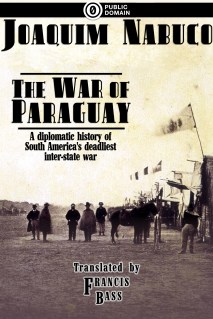
The War of Paraguay: Chapter V pt. 2, Saraiva’s Mission. — The Uruguayan War

twop-c-10This post remains available for posterity’s sake, but a much revised and much expanded version of this translation is available completely for free! The revised version includes translated footnotes, a translated appendix, an expanded introduction, and a map of disputed territory and important locations. You can download a copy in the following formats: DocxEpubMobiPDF. Or, if you want to throw some money my way, you can set your price for it on Smashwords. And it’s in the public domain!

One cannot deny that this was an intervention into eastern politics, but it was a disinterested intervention, according to the interests of the Republic and the desires manifested by it in the past; but not even this offered support was enough to become an effective intervention, remaining on offer to any government that would assume the responsibility of accepting the intervention to pull together the parties and reorganize the country. And this was not the case only with Brazil’s support—the impartial candor with which it was offered elicited support from the Argentine Republic and commanded the respect of Great Britain, engaged in the mediation. What Saraiva really wanted was to infuse Aguirre with validity. “I am, however, convinced,” he told the imperial government, “that if the president reforms the ministry he will not request nor need to request a single soldier from Brazil. The Eastern State needs order, and its inhabitants yearn to see it reestablished by a government of men who are sincere, active, and upright. A new administration with these characteristics and with the moral support of the other powers will have sufficient strength to establish order and impede revolts.”

Atanasio_Aguirre
Atanasio Aguirre ca. 1861

That negotiation was aborted. Aguirre promised to constitute a new ministry, but with elements still more factional, and with Leandro Gómez (14) figuring in it. The mediators put forth the names of Castellanos, Villalba, Andrés Lamas, Martínez, Herrera, and Obes. Given the impossibility of coming to an understanding, the representatives of the three nations brought the mediation to an end on 7 July.

Saraiva went to confer with Mitre in Buenos Aires. In that Republic the dominant political attitude was hostile to the Blanco party; all sympathy was with Flores, and because of that Brazil’s intervention, at a time in which it was equivalent to insuring victory for the revolution, was considered by the Argentine government to be an act of providence, an unexpected gift of fortune. Saraiva and Mitre got along from then on, and from this perfect accord resulted the new Brazilian doctrine in the Plata, which from 1864 to today governs the relations between Brazil and the Argentine Republic. For that reason, perhaps by having known Mitre’s government’s intentions, and having penetrated their desires with regards to Montevideo, Saraiva is still more convinced that peace is the most agreeable policy for Brazil, and from Buenos Aires he even tries to attract Aguirre to his ideas, meeting up with his confidential agent Reguera.Read More »

The War of Paraguay: Chapter V pt. 1, Saraiva’s Mission

twop-c-10This post remains available for posterity’s sake, but a much revised and much expanded version of this translation is available completely for free! The revised version includes translated footnotes, a translated appendix, an expanded introduction, and a map of disputed territory and important locations. You can download a copy in the following formats: DocxEpubMobiPDF. Or, if you want to throw some money my way, you can set your price for it on Smashwords. And it’s in the public domain!

Note: This is a really long chapter, so I’m splitting it into two parts. This won’t be a regular thing though—I think there’s only one other chapter, maybe two, long enough that I’ll want to split them up. Also, see this post for background info.

When the old brigadier Netto (1) came to Rio de Janeiro, at the beginning of 1864, to excite our government against Uruguay’s, presenting, as the new leader of the eastern campaign, a portrait of the long-standing abuses committed against Brazilians, it produced a fury of opinion, and from this violent impulse was born Saraiva’s mission. We had suffered the humiliation of English retaliation at the Rio de Janeiro bay entrance, and the ideology of democracy, with Teófilo Ottoni (2) at the head, showed itself to be of as bellicose a humor as the emperor himself was said to be. Given these circumstances, Netto’s presence inflamed spirits predisposed to acts of imprudence and senselessness. The conservative party took the initiative to make interpellations in the Chamber of Deputies about the state of the campaign.

From this so-called patriotic attitude of the opposition and the majority, in the session of 5 April what resulted was war, unless the Blanco government would completely yield to the demands and grievances of the Brazilians enlisted under Flores’s flag. Today it would not be possible to investigate whether or not our complaints were founded. The Brazilians residing in Uruguay (3) should have suffered the fate of the easterners themselves, or abstained from any interference with those factions which always devastated the countryside. Neither should the Brazilian government have forgotten the chronic anarchy of the Republic. Order, peace, and calm in the Eastern State were only possible if Brazil and Argentina united for many years to uphold the healthy elements of that country; but since Brazil and Argentina could not do so and did not want to do so, they lost the right to demand responsibility in the eastern government, whatever it was, because of acts that almost always resulted from the state of disorder in the border regions. It is unnecessary to examine the claims and complaints one by one to be sure that the ministry of 15 January 1864 made a mistake in yielding to their first impulse and allowing themselves to be commanded by the clamor of Flores’s supporters, who demanded immediate intervention in Montevideo.

Jose_antonio_saraiva
José Antônio Saraiva, Brazilian Foreign Relations Minister 1865-1866.

If our country had the luck to not be immediately engaged in a war with this Republic, it owes it only to the circumstances of having conferred to Saraiva the role of inspector. Succeeding events have proved that if others had found themselves in his position, the mission would have begun with the occupation of Uruguayan territory, followed by the bombardment of Montevideo, and a war against the entire Río de la Plata.

Saraiva arrives in Montevideo on 6 May 1864. His instructions are to address to the eastern government “our last friendly intimation,” concluding by demanding, with regard to the crimes and abuses against the lives and property of Brazilians, “1st That the government of the Republic put into effect the necessary punishments, if not for all the criminals, then at least those that, being recognized as such, go unpunished, and even occupy some posts in the eastern government or work in state offices. 2nd That the police officers that have abused the authority they exercise be immediately dismissed, and held accountable. 3rd That those Brazilians that have been dispossessed of their property by military or civil authorities of the Republic be compensated justly. 4th Finally, that the Brazilians forced to take up arms in service of the Republic be completely released.”Read More »

New Publication: Suggest the Empire

Awhile ago I wrote a post about learning from Shakespeare’s histories. The reason I read those plays was to prepare for writing Suggest the Empire, a full-length play which is now available on Smashwords and Amazon! And you can read the sort-of-self-contained first act for free! (See below.) Here’s the synopsis:

SuggesttheEmpire-c-2To Prince Oht, heir apparent of the Olisan Empire, all the trappings of nationhood seem as skeletal and artificial as the trappings of theatre. War chants to suggest fraternity, court language to suggest royalty, flags to suggest ownership—all are equal to flimsy poles to suggest spears, colored cloth to suggest flags, three men to suggest an army. All his cynicism is of little consequence while his father, the charismatic Alita Tolkash, still rules as emperor, but the time will come when Oht has to step up. And when Tolkash is injured in battle, and begins to have his own doubts about what the empire truly is, it looks like that time of responsibility is drawing sooner and sooner.

Suggest the Empire follows in the Shakespearean tradition of history plays, though it tells a completely invented history in a completely invented world. Relying entirely on representational sets and costuming, the play portrays a centuries-old empire caught at a momentous crossroads, with conflict brewing in all quarters.

Run time is 160-180 minutes. Cast is 26 (no gender restrictions), with potential for double casting.

If you read We’ll Tell Happy Stories, this play is set in the same world as that one. There’s hardly any crossover at all (completely different characters, different settings), but Suggest the Empire has the same kind of world-building and treatment of language as in We’ll Tell—so if you liked the one, you’ll probably like the other.

The publication also contains an afterword in which I discuss the origins of the idea, my imperialist writing policy, and my method for writing court Olisan.

If you want to get a sample of the play, you can read the first act, which is sorta self-contained, for free in the following formats:

PDFEpub — Mobi

What I’ve Been Reading, December 2017

Another one! Already! Well, I’ve been reading a lot, and honestly the fact that this is being posted in December has more to do with when I got around to writing it all of it than when I read the books. Anyway, here’s what I’ve been reading, more or less around this time:

Tar Baby by Toni Morrison — Tar Baby is one of the most focused books by Morrison. The majority of it takes place in one house, on one island, with a core cast of just six. With long passages of just dialogue, the book often feels like a play. It’s also a break from Morrison’s typical MO in that it spends a lot of time focused on white characters. Those white characters are Valerian and Margaret Street, and the book starts out following them, a husband and wife, Valerian being the heir to his family’s massive candy business, Margaret a beauty queen twenty years her husband’s junior. Now retired, Valerian lives in what was once just his summer home, a manor on the caribbean Isle des Chevaliers, tended to by Sydney and Ondine. Christmas time is nearing, and Jadine Childs is visiting the manor—a successful young black fashion model, raised by Sydney and Ondine, and put through college by a generous sponsorship from Valerian. That’s five of the core cast I’ve just mentioned. The sixth shows up when Margaret finds him hiding in her closet—a black man named Son, a fugitive who jumped ship in the Caribbean and managed to swim to Isle des Chevaliers. Inexplicably, and to Margaret, Sydney, Ondine, and Jadine’s horror, Valerian decides to invite Son to stay with them, as a guest.

The majority of the book is the action that plays out between this major disruption in the house—the disruption of Son’s arrival—and the disruption which occurs around the Christmas dinner (right from the beginning its clear that Christmas dinner is not going to be the perfect gathering that Margaret is planning for.) Watching the reactions of these characters of all different social and racial backgrounds is fascinating, a thorough study in social hierarchy and perceived social status, and what people do when they feel their status is threatened or challenged—and the build up and eventual explosion of all the anxiety and pressure Son’s arrival has caused is masterful. It’s also great to see Morrison flex her considerable dialogue muscles here—dialogue is something she’s terrific with (is there anything she’s not terrific with?), but in this book it’s featured prominently, as the main means of propelling the story along.

A great book to read for Christmas! (jk jk jk i mean its great for anytime but lol this aint rudolph or whatever)Read More »

2017 Holiday Sale!

holidaypromo2018-1.jpg

Merry whatever and joyous thingummy everyone! All of my ebooks are on sale on Smashwords for the month of December! Most of them are 50% off, and the newer releases (19 and 19, “A Clash at Grozny Airfield,” and Suggest the Empire once it’s published later this month) are 25% off. And “Just Dig” is 34% off. Cause it wouldn’t let me do 50%, cause the price is already almost at the minimum.

Happy solstice y’all!

The War of Paraguay: Chapter IV, Antecedents to the Uruguayan Issue

twop-c-10This post remains available for posterity’s sake, but a much revised and much expanded version of this translation is available completely for free! The revised version includes translated footnotes, a translated appendix, an expanded introduction, and a map of disputed territory and important locations. You can download a copy in the following formats: DocxEpubMobiPDF. Or, if you want to throw some money my way, you can set your price for it on Smashwords. And it’s in the public domain!

NOTE: This chapter and the next focus on Uruguay, and the civil unrest there from 1850-1865, so I recommend you first read this supplemental post about the Uruguayan War if you haven’t already. Also, a more general note, though I’ve decided to include some translations of footnotes from the original text, in places where I would have to add my own translator’s note otherwise. Why write a translator’s note when I can just translate a note that Nabuco wrote for me? “Footnotes” are Nabuco’s, “Translator’s Notes” are mine.

Since the war against Rosas the Argentine dictator (1), when we prevented Montevideo from falling under Oribe’s control (2), the matter of the Eastern State of Uruguay was the most important and dangerous foreign policy problem. We had no ambitions on its annexation, nor did we want to mix ourselves up in its internal affairs, our sole purpose being to have a peaceful and secure border, for which the complete independence of that state was an essential condition. “The foreign policy,” writes the Baron of Rio Branco, a supporter of this thinking, “created by the conservative party and principally by Paulino de Souza, Viscount of Uruguay, consisted then, as it still does today [1875], of maintaining the independence of the two states threatened by Argentinian ambitions: Paraguay and Uruguay.”

The years have greatly modified the Argentine Republic’s aspirations, as measured by that primitive platine sentiment becoming different on both sides of the Río de la Plata; but it can be said that not even today is the old hope of re-forming the former viceroyalty (3)—if not in its entirety, then at least in the Plata basin—completely dead for Argentine patriots. Many sons of Buenos Aires still dream of the United States of South America, sons on whom the tradition of the past and a common literature still weigh heavy, with the same force as they did on the mid-century generation, contemporary to the siege of Montevideo. Back then, however, this sentiment was more alive and more broadly asserted.Read More »