What I’ve Been Reading, November 2016

Lot’s of books about Vietnam, because I’m in a literature class called “Reimagining Vietnam.” So, here’s what I’ve been reading:

The Quiet American by Graham Greene – The Quiet American is a book narrated by Thomas Fowler, a jaded British journalist working in Vietnam during the violent overthrow of French colonialism. The American of the title is Alden Pyle, a representative with the American economic mission, who seems to have some greater role than he lets on.

The book’s plot is pretty interesting in it’s own right, mainly focusing on the growing relationship between Pyle and Fowler, and Pyle’s attempts to win the heart of Fowler’s Vietnamese mistress—but what I enjoyed most were all the questions it raised about being “engagé.” Fowler firmly believes in remaining neutral as a journalist, while Pyle is full of idealism, convinced that America can do good in bringing democracy to Vietnam—before the US even had a strong military presence there. The book was published shortly after the events described in it—before the “Vietnam War”—but the debates between Fowler and Pyle about the role of western powers in under developed nations have only become more and more relevant. What is the global role of a fading colonial power? What is the role of a rising superpower? At what point does inaction become action?

The book is a quick read, full of dry wit, vivid descriptions of the communist uprising, and terrific dialogue.

The Things They Carried by Tim O’Brien – Vietnam book number two. The book is a collection of short stories revolving around a platoon of American soldiers in the Vietnam War. Most of the stories are narrated by a fictitious version of the author. Some are short vignettes, some are longer, more traditional stories, and some are almost like personal essays, with choppy bits of story and pieces of argument or reflection mixed together.

The more traditional stories are all compelling. O’Brien does a masterful job of characterizing the soldiers and the landscape around them. The opening piece, “The Things They Carried,” is a long meditation on the physical and emotional burden of each of the soldiers, all their memories and personal totems. One of my favorites is “On the Rainy River”, which describes the narrator’s struggle deciding whether or not to dodge the draft. These types of stories, with their intimate depth of character and reflective tone, would be enough for me to highly recommend this book. What makes the collection really special, and something worth re-reading, is the inclusion of those more non-fictional pieces. Pieces like “Spin,” “How to Tell a True War Story,” and “Good Form” add another layer to the book, calling into question the truth of things, and the purpose of writing, and remembering, and telling war stories. And O’Brien did fight in Vietnam, so there’s another layer. The book is rich with experience and questions, an engaging read and one to remember, and keep thinking about, as well.

No Man’s Land by Duong Thu Huong – This book is great. It takes place in (surprise!) Vietnam shortly after the victory of the Communist forces, in a town called Mountain Hamlet. The action kicks off almost immediately when Mien, one of the three main characters, finds that her first husband has returned from the dead. She had married him just before he went off to war, and for over a decade he’s been presumed dead. In that time, Mien married an entrepreneur named Hoan, and had a child with him. But once her first husband, Bon, returns, she feels a social and moral obligation to become his wife again.

The strength of the book is the characters. The main characters are the members of the love triangle, Bon, Hoan, and Mien, but there are plenty of side characters that are just as interesting. Everyone has a backstory, with more depth and hardship hidden beneath the surface. Huong digs deep into all the characters, and all the settings, with descriptions that range from beautiful to horrifying. Everything is so well wrought, the characters and settings and backstories all leave deep emotional impressions on the reader. Of all the books I’ve read so far for my Vietnam class, this one is my favorite.

The Adventures of Huckleberry Finn by Mark Twain – As with many of Mark Twain’s books, this one is all over the place, in terms of tone and subject matter. Most of the time, it works, and the result is a book that is full of many different memorable characters and entertaining situations.

If you don’t know the plot already, Huckleberry Finn follows the Huck and Jim, a runaway slave, as they run away from their abusive father and their owner who plans to sell them down the river, respectively. They set off on a raft down the Mississippi, intending to take a turn around the south end of Illinois and head northeast, to the free states. The book is mostly composed of short episodes which occur as they travel down the river.

This is the strength of the book. These episodes are full of larger-than-life characters, like the Duke and the King—two conmen who board the raft as they’re being chased out of the town they just ran a grift on—or the Grangerfords and the Sphepherdsons—two families on opposite sides of a generations-old feud, whose cause know one can even remember anymore. Below the surface all the colorful characters and funny stories are issues of race, dominance, violence, mob mentality, religion, and, of course, slavery. The balance that Twain strikes between entertainment and substance is terrific and compelling, and it’s why the book is a classic. Unfortunately, the ending is (famously) underwhelming, and abandons the substance in favor of just entertainment, leaving all those issues unresolved and unacknowledged.

Regardless, the book is absolutely worth reading, and there’s a great audiobook of it, performed by John Greenman, on Librivox.
Learning from Shakespeare’s Histories

adolf_schro%cc%88dter_falstaff_und_sein_page
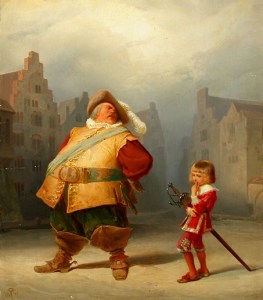
Falstaff and his Page by Adolf Schrödte

In preparation for writing a historical play (not based on real history, but a play with banners and kings and armies) I’ve been reading a few of Shakespeare’s histories—namely, Richard IIHenry IV part 1Henry IV part 2Henry V, and Julius Caesar.

Now, I’m not taking any classes on Shakespeare, nor have I ever taken any classes exclusively focused on Shakespeare. This post doesn’t come from a well-informed scholarly background, or from someone intimately familiar with the discourse surrounding Shakespeare. I’m just some guy who likes reading and writing and watching plays. With that said, this is what I’ve learned.Read More »

New Publication: Monastery

School’smonastery-c-hvd-2 back in, so what better time to read a play about the future of higher education and students arguing with each other?

You can buy Monastery on Smashwords or on Amazon. Here’s the synopsis:

A couple decades in the future higher education has evolved, and Academic Campuses (sometimes referred to as “monasteries”) offer an affordable, though longer and more intensive, alternative to universities. In this hour-long play, the student editors of the Marietta Academic Campus’s literary journal, The Mac, meet just before the start of summer to finish up the latest issue, and to celebrate their success. As the play continues, a hypothetical conversation about graduating early and starting up a magazine outside the monastery turns into a spirited argument.

As usual the publication includes an afterword. In this one I describe my own arguments with myself about college, and my outlining process for the play.

Harry Potter and the Holistic Review

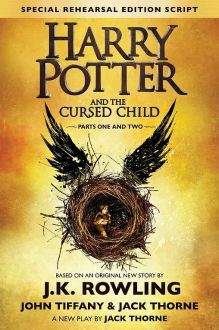
Harry_Potter_and_the_Cursed_Child_Special_Rehearsal_Edition_Book_CoverI just finished Harry Potter and the Cursed Child, and I feel like it was one of the most multi-layered reading experiences I’ve ever had with a contemporary work. By multi-layered I mean that I was thinking about, and analyzing meta-textual elements while reading it—which is a common enough experience, when I’m reading old literature for my english classes, but pretty rare with recently published books and plays. So, rather than just reviewing the play as I might review Mr. Burns or Water by the Spoonful, I’m going to review the play in all it’s aspects—the things I noticed as a reader, as a writer, as a theatre person(ish), as a fan of the original books, and as someone interested in the publishing industry. I’ll mention plot elements throughout this post, so if you don’t want the play spoiled, halt now.
So, let’s begin.Read More »

What I’ve Been Reading, August 2016

Whew. It’s been awhile since I did one of these, but here goes.

Lagoon by Nnedi Okorafor – Lagoon is a book about Lagos, Nigeria, and what happens when aliens arrive there. It’s a sprawling portrait of the city, its people, its landmarks, and the ecosystem it was built around. It focuses most on three individuals—a marine biologist, a soldier, and a rap star, who all find themselves wandering out to the beach shortly after the aliens arrive, and being sucked into the lagoon.

The book has an enormous ensemble of characters, and still manages to have all of them distinct enough that you can keep track. It also does an excellent job of describing the city, which becomes even more important as the book goes on, and parts of the city literally come alive. The story twists and turns without a clear direction, but it’s a lot of fun following those twists, and the book is constantly introducing new and interesting characters and ideas. A testament to how well characterized everything in his story is—it’s been over three months since I listened to it, and I can still remember multiple characters and events that are only mentioned in a single chapter.

Also I listened to the audiobook of it, over the course of the long drive from Iowa City back to Tallahassee, and the narrators (a male and a female) are fantastic.

Seriously though, as I write this description, I keep remembering characters and details from the book, like the guys running 409 scams, and the rapper from Atlanta, and the fantastically entertaining and dislikable preacher. That’s because it’s awesome. Nnedi Okorafor is awesome. Check this book out.Read More »

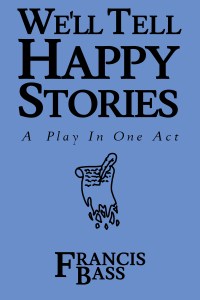
New Publication: We’ll Tell Happy Stories

We’ll Tell Happy Stories is now availableCover-2 on Smashwords and Amazon!

The 70-minute play is about Boa and Ardom, two refugees posing as ambassadors. With the help of a local captain, they and their daughter have survived for years pretending that their home country, Choroa, is still perfectly stable. When a royal edict orders that all Choroans must leave the country or face enslavement, Boa and Ardom must reveal harsh truths and spin fanciful stories in order to convince their hosts that they should be allowed to stay.

The publication also includes an afterword describing how the classes I was taking at the time affected this play, the origins of some of the names, and other trivia you may find interesting.

You can read the first half of the play for free below.Read More »

The Absolute at Large – Chapters 29-30

The final chapters!

Chapter 29 – The Final Battle
As the war drags to a messy, underwhelming conclusion, it is difficult to determine where the final, and supposedly decisive, battle takes place.

Chapter 30 – The End
In an inn in Damohorskych, many years after the war, Brych, Binder, Jošt and Rejzek all gather for a fry-up.

Also available on Podomatic and iTunes.
Find the text of the ebook here.

This recording is under a Creative Commons attribution, noncommercial, share-alike license.
Music was composed by Johan Halvorsen and performed by the United States Marine Band.
The book was written by Karel Čapek, translated by David Wyllie, and performed by Francis Bass.

The Absolute at Large – Chapters 27-28

Just two more chapters after this!

Chapter 27 – A Pacific Atoll
The world war reaches the little island where Mr. Bondy has been hiding out, and he discusses the phenomenon with a captain who has stopped by.

Chapter 28 – Seven Chalets
In the Czech countryside, Mr. and Mrs. Blahouš and their neighbor Mrs. Prouza speculate about the Greatest War, and who and what started it.

Also available on Podomatic and iTunes.
Find the text of the ebook here.

This recording is under a Creative Commons attribution, noncommercial, share-alike license.
Music was composed by Johan Halvorsen and performed by the United States Marine Band.
The book was written by Karel Čapek, translated by David Wyllie, and performed by Francis Bass.

The Absolute at Large – Chapters 25-26

Chapter 25 – The Greatest War Ever (as they called it)
The chronicler explains why this war “really was, I swear it, quite easily the greatest war ever.”

Chapter 26 – The Battle of Hradec Králové
The chronicler uses the Battle of Hradec Králové, where the forces of General Hampl gathered to overthrow Mayor Skočdopole, as a reflection of world events on a smaller scale.

Also available on Podomatic and iTunes.
Find the text of the ebook here.

This recording is under a Creative Commons attribution, noncommercial, share-alike license.
Music was composed by Johan Halvorsen and performed by the United States Marine Band.
The book was written by Karel Čapek, translated by David Wyllie, and performed by Francis Bass.

The Absolute at Large – Chapters 23-24

Chapter 23 – Conspiracy in Augsburg
In the course of two months, all the nations of the world plunge headlong into war.

Chapter 24 – Napoleon of the Mountain Brigade
In the mountains of southern France, Lieutenant Toni Bobinet declares war on the Absolute, and begins a campaign of sprawling conquests.

Also available on Podomatic and iTunes.
Find the text of the ebook here.

This recording is under a Creative Commons attribution, noncommercial, share-alike license.
Music was composed by Johan Halvorsen and performed by the United States Marine Band.
The book was written by Karel Čapek, translated by David Wyllie, and performed by Francis Bass.

The Absolute at Large – Chapter 22

Chapter 22 – An Elderly Patriot
As Czech reporter Cyril Kéval and his fellow journalists wade through endless reports of minor conflicts, skirmishes, and riots from around the country and the world, Kéval happens upon a letter from an “Elderly Patriot” calling for national unity.

Also available on Podomatic and iTunes.
Find the text of the ebook here.

This recording is under a Creative Commons attribution, noncommercial, share-alike license.
Music was composed by Uzeyir Hajibeyov and performed by the United States Navy Band.
The book was written by Karel Čapek, translated by David Wyllie, and performed by Francis Bass.

The Absolute at Large – Chapters 20-21

Chapter 20 – St. Kilda
As tension rises around the world, a global summit is convened to maintain peace and order.

Chapter 21 – A Dispatch
A postman makes his way through a blizzard to deliver a telegram to a Mr. Marek.

Also available on Podomatic and iTunes.
Find the text of the ebook here.

This recording is under a Creative Commons attribution, noncommercial, share-alike license.
Music was composed by Uzeyir Hajibeyov and performed by the United States Navy Band.
The book was written by Karel Čapek, translated by David Wyllie, and performed by Francis Bass.

The Absolute at Large – Chapters 18-19

Chapter 18 – Night Time in the Editing Room
As religions and governments all over the world embrace the Absolute, Bishop Linda berates the editor of a Catholic Journal for continuing their invective against Him.

Chapter 19 – The Canonisation Process
The Catholic Church goes through the long, unprecedented procedure of welcoming the Absolute into the church as its God.

Also available on Podomatic and iTunes.
Find the text of the ebook here.

This recording is under a Creative Commons attribution, noncommercial, share-alike license.
Music was composed by Uzeyir Hajibeyov and performed by the United States Navy Band.
The book was written by Karel Čapek, translated by David Wyllie, and performed by Francis Bass.

The Absolute at Large – Chapters 16-17

Chapter 16 – In the Mountains
Mr. Bondy and Marek meet in Marek’s house in the mountains, where the Absolute’s influence has yet to reach.

Chapter 17 – The Hammer and the Star
The brothers of the Hammer and Star lodge of the Free French Masons meet to discuss their response to the recent activities of the Absolute.

Also available on Podomatic and iTunes.
Find the text of the ebook here.

This recording is under a Creative Commons attribution, noncommercial, share-alike license.
Music was composed by Uzeyir Hajibeyov and performed by the United States Navy Band.
The book was written by Karel Čapek, translated by David Wyllie, and performed by Francis Bass.

The Absolute at Large – Chapters 13-15

Chapter 13 – The Chronicler Apologises
The chronicler apologizes for his inability to describe every story and character caught up in the worldwide influence of the Absolute.

Chapter 14 – Land of Plenty
The chronicler describes the obscene abundance created by the Absolute.

Chapter 15 – Upheaval
The chronicler explains the disastrous affects of the Absolute’s overproduction, and how humanity was saved from total starvation.

Also available on Podomatic and iTunes.
Find the text of the ebook here.

This recording is under a Creative Commons attribution, noncommercial, share-alike license.
Music was composed by John Philip Sousa and performed by the United States Marine Band.
The book was written by Karel Čapek, translated by David Wyllie, and performed by Francis Bass.

New Publication: Beach Realty of Sandcastle Isle

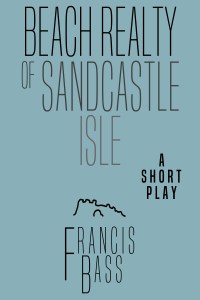
Beach Realty of Sandcastle Isle is now available for purchasecover-5 on Amazon!

UPDATE: Also on Smashwords!

The fifteen-minute play follows two characters—Raymond Mare and Sandra Holt—as they vie for control of Sandcastle Isle. Ray is the CEO and inheritor of Mare Realty, an old, moneyed company which has a near total monopoly on the Floridian beach island. Sandra Holt works for the newer, less successful Beach Realty of Sandcastle Isle. Sandra, pretending she’s only a tourist, befriends and manipulates Ray, and the power dynamic between the two companies begins to shift. With each passing scene, the stage is constricted as the water rises, and the beach steadily erodes.

If you read my post “That’d Make a Great Play,” this is the play I was talking about. I was driven to right it because I found the spectacle of staging an eroding beach so interesting (it was also an assignment for my playwriting class, but whatever—I would’ve written it anyway.)

Included also in this publication is an afterword describing how I came upon this idea, why I went the path that I did with it, and why the name is so damn long.

What better summer reading than a play about Florida sinking?

The Absolute at Large – Chapter 12

Only one chapter today, because the next three chapters work well as a block, and I didn’t want to split them up. So, three chapters next Sunday, and just one chapter today—though it’s a very fun chapter.

Chapter 12 – The Private Tutor
The learned Doctor Balhouš sets out to write an academic paper regarding recent episodes of religious fervor and fanaticism, and does so all day long, and through the night.

Also available on Podomatic and iTunes.
Find the text of the ebook here.

This recording is under a Creative Commons attribution, noncommercial, share-alike license.
Music was composed by John Philip Sousa and performed by the United States Marine Band.
The book was written by Karel Čapek, translated by David Wyllie, and performed by Francis Bass.

The Absolute at Large – Chapters 10-11

Chapter 10 – The Blessed Elen
Mr. Bondy ponders the state of the world as he walks the streets, and has a chance encounter with his once love, Elen.

Chapter 11 – The First Conflict
A carousel fitted with a carburator becomes a divine sanctuary, and its owner a spiritual leader, but there is friction when the carousel starts touring near the holy dredger.

Also available on Podomatic and iTunes.
Find the text of the ebook here.

This recording is under a Creative Commons attribution, noncommercial, share-alike license.
Music was composed by John Philip Sousa and performed by the United States Marine Band.
The book was written by Karel Čapek, translated by David Wyllie, and performed by Francis Bass.

The Absolute at Large – Chapters 8-9

Chapter 8 – On the Dredger
A religious service is held on a boat fitted out with a carburator, and a large group gathers to hear the good word about the god of the dredger.

Chapter 9 – A Celebration
A journalist attends the grand opening of the Central Electricity Carburator, which will power all of Prague, and the Mayor gives a lengthy speech.

Also available on Podomatic and iTunes.
Find the text of the ebook here.

This recording is under a Creative Commons attribution, noncommercial, share-alike license.
Music was composed by John Philip Sousa and performed by the United States Marine Band.
The book was written by Karel Čapek, translated by David Wyllie, and performed by Francis Bass.

The Absolute at Large – Chapters 4-5

Chapter 4 – God in the Basement
Marek warns Mr. Bondy of the dangers of letting God into the world.

Chapter 5 – The Consecrating Bishop
Mr. Bondy and Marek meet with a bishop to discuss the holy site which the carburator has become.

Also available on Podomatic and iTunes.
Find the text of the ebook here.

This recording is under a Creative Commons attribution, noncommercial, share-alike license.
Music (the Montenegro national anthem) was performed by the United States Navy Band.
The book was written by Karel Čapek, translated by David Wyllie, and performed by Francis Bass.